EcoPrefab: .eco champion
With Uganda's young and rapidly growing population, there is an urgent need for schools. EcoPrefab is meeting that demand.
We spoke with Felix Holland, Director & Principal Architect of EcoPrefab, about how they are quickly and sustainably building schools in East Africa.
What is the story behind EcoPrefab?
East Africa is lacking tens of thousands of schools. The region is committed to reducing carbon emissions by 25% by 2030. At the same time, Uganda is experiencing an overproduction of eucalyptus and pine, calling for the creation of a sustainable timber processing industry.
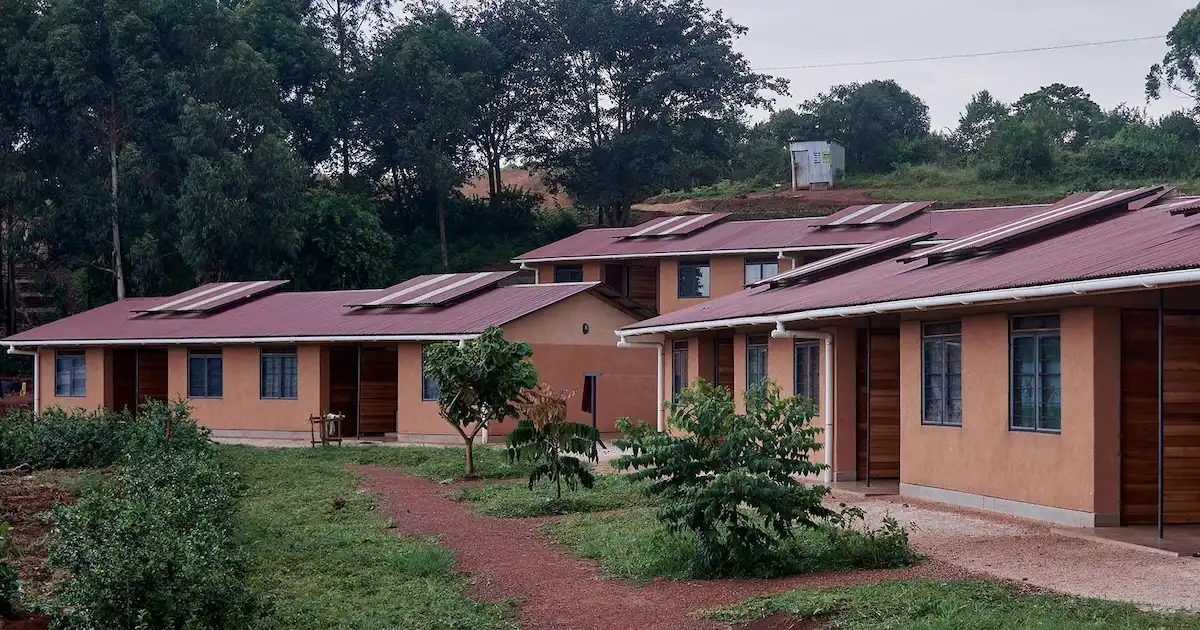
EcoPrefab was developed in response to all three challenges. Based on lime-plastered wall panels made of sustainable timber, prefabricated in a controlled factory environment, EcoPrefab presents a viable solution to building many schools, at an affordable cost, and in a short period of time.
Why did you decide to focus on building schools?
According to UNICEF, Uganda has the second youngest population in the world and faces the pressing need for a robust education system to harness the potential of its youthful demographic while simultaneously struggling to keep up with a growing demand that outpaces the state’s capacity to provide sufficient school infrastructure.
Enabel estimates that, in order to meet the growing demand for education driven by population growth, at least 8,000 new schools will be required in Uganda. With over 20 years of technical expertise in educational design, we are well positioned and fully competent to deliver high-quality, sustainable school infrastructure at the scale required.
How does your prefabrication process work?
Our EcoPrefab process begins with the responsible sourcing of materials. The timber used in the construction of EcoPrefab schools is procured from FSC-certified suppliers such as Busoga Forestry Company, ensuring sustainable forest management practices.
The timber components are fabricated in our dedicated timber workshop, while all steel elements are prepared in a specialized steel workshop. Each component undergoes strict quality control checks before being transported to site.
Works begin with site clearance, excavations, and foundation construction. The prefabricated elements are then assembled efficiently, significantly reducing construction time compared to conventional building methods.
Overall, once foundations are complete, the superstructure can be assembled within a matter of weeks, depending on the scale of the project.
What are some of the sustainability benefits of your approach?
Conventionally used materials such as concrete blocks and fired clay bricks have a high amount of embodied energy, i.e. they consume a lot of energy to be produced, transported and installed. Timber, on the other hand, is a renewable resource that stores carbon for the lifetime of the building instead of emitting it into the atmosphere.
EcoPrefab technology, together with the use of bio-based materials, reduces carbon emissions by up to 75% compared to conventional construction methods and materials.
The classrooms are designed to maximize natural lighting and ventilation, significantly reducing reliance on artificial lighting and mechanical ventilation systems.
Why did you choose a .eco domain for your work?
It perfectly embodies our green mindset. Both Localworks and EcoPrefab are genuinely sustainability-driven enterprises, and this identity is central to how we operate. We felt that reflecting this commitment in our domain name, rather than tying it to a specific geographic location, sends a stronger and clearer message about our values and long-term vision.
At .eco, we are fortunate to be surrounded by a community of businesses, organizations and individuals working hard to protect our planet. We are honoured to spread the word about the great work they're doing. If you are a member of the .eco community and would like to be featured, get in touch.