
An interview with a climate scientist
We spoke with a top climate scientist about the latest research and findings from the Intergovernmental Panel on Climate Change.
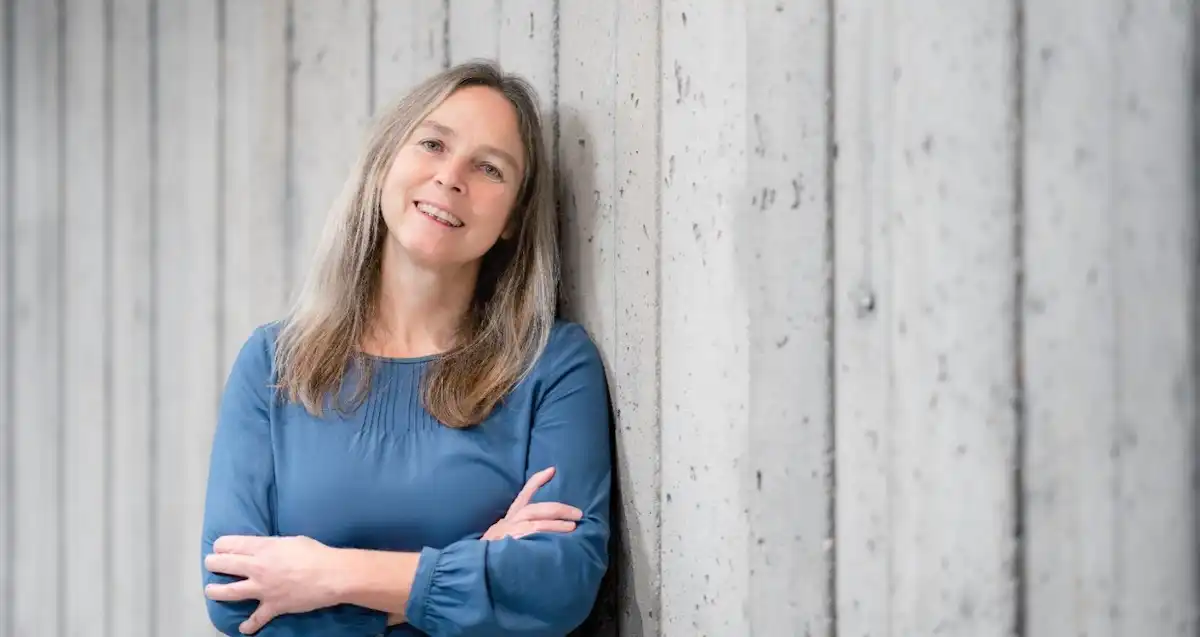
We recently spoke to Dr. Kirsten Zickfeld, one of the convening lead authors of the upcoming 7th IPCC Assessment Report and Distinguished Professor at Simon Fraser University (SFU) in Canada. Kirsten was just inducted into the Royal Society of Canada, Canada's highest national academic honour.
How did you become involved with the IPCC?
My career is strongly linked to the IPCC. When I started my PhD I became a chapter scientist for my PhD supervisor, who was a lead author for the IPCC at the time. During the later stage of my PhD and then my postdoc, I became a contributing author, which means that you're asked to deliver pieces of text to the IPCC assessment. I became a lead author for the Special Report on a Global Warming of 1.5ºC that was released in 2018. And now, in the 7th Assessment Report, I have a more senior role as a convening lead author, which means that I'm responsible for the vision of a chapter of the IPCC report.
Approximately how many people are involved in contributing to each of these reports?
The IPCC has different cycles that happen every 7 to 8 years. Within each cycle, there are several different reports. There are three assessment reports: one about the science, one on impacts, vulnerability and adaptation, and one on emission reduction and mitigation. On top of that, there are also special reports. Right now, there is a special report on short-lived climate forces covering things like methane that's in the atmosphere only for a short period of time. There is also a report on national greenhouse gas reporting, which is important to member countries. In the current assessment cycle, there are 5 different reports, each with around 200 lead and convening authors. On top of that, there are hundreds of contributing authors. So I would say overall, there are probably 1000 people who contribute to each of these volumes.
As a convening author, how do you ensure that all of these different voices are aligned when preparing the report?
That is a challenge because people come in with different experiences, different personalities. Managing the team and making sure that everybody is heard is a major task. When we facilitate meetings and when we when we produce a report, we make sure that the important statements of policy relevance are decided by consensus, and that people who maybe are quieter or don't have as much experience are given the floor to express their ideas. This means finding compromises that work for everybody. This is also how the IPCC works because when you bring the report to the delegations, and then to the final plenary where the summary for policymakers is approved, that also has to happen by consensus. So it's not just the majority — every single delegate of every nation has to sign off on the wording of the summary for policymakers.
For the upcoming reporting cycle, what is the specific area that you are focussed on?
The chapter that I am convening is called Pathways towards Temperature Stabilization including Overshoot. This is tightly linked to the fact that we've now pretty much exceeded the 1.5ºC target from the Paris Agreement (1.5ºC warming above the pre-industrial levels). The target is based on a climate average, meaning that it has to be measured over 20 years. It's not just a single year exceeding 1.5ºC, we've had that already. Exceeding the target is now inevitable given that we haven't even peaked global carbon dioxide emissions globally. There's no way this target can still be met.
The question then is, what happens when we exceed 1.5ºC? Can we stabilize at a higher level than 1.5ºC? Are there pathways that exceed the 1.5ºC and then take us back to 1.5ºC later on?
What do we need to do? Not from a technological point of view, that's the purview of the mitigation reports. But scientifically, what do we need to do to come down from a peak temperature? What does it mean for other climate impacts that are not just higher global temperatures? That could be regional temperatures, it could be sea level rise, it could be melting glaciers, ice sheets or permafrost, disrupted ocean circulation, or other climate extremes.
To cool the planet, we need to have a net removal of carbon dioxide from the atmosphere. If we reach Net Zero emissions, temperatures should remain approximately stable. Then if we want to reduce temperatures, we need to remove more from the atmosphere than we put into it. We're pretty far from that point, but let's say if one day we get there then temperatures could come down. But how about the other impacts? Sea level rise or permafrost thaw would still continue even if we manage to reach a peak temperature and then decline from the peak.
These are the questions we aim answer in the report. It's still an emerging area of research. The concept of overshoot has been around for decades, but the research in that area is relatively recent. So there's still a lot of knowledge gaps and things we don't fully understand.
What is one thing that you think that people generally don't understand about climate change?
I don't think that people realize that climate change is now pretty much irreversible. Even if we manage to decarbonize our entire system, we have to live with the warming we have now. We have to live with temperature extremes and other impacts like sea level rise, which have very long time scales. They will still be ongoing. It's impossible to dial back from what we have now, unless we have a huge capacity to remove carbon dioxide at a very large scale, which we don't have at the moment. We're locked in. Even if we manage to fully decarbonize our global economy, we're locked into the climate impacts that we experience right now.
What is the current research on carbon removal as a way to bring temperatures back down?
This is a very active area of research. It's something countries like a lot because it seems much easier to plant trees than to cut carbon emissions.
There are many different ways to remove carbon. There are what are called nature-based climate solutions that covers planting trees, but also restoring ecosystems, peat lands, coastal wetlands, and other ecosystems that naturally sequester a lot of carbon. It also includes soil carbon management as a lot of carbon is lost through agricultural practices.
What is important to understand is that these carbon removal solutions are helpful to balance residual emissions that we cannot otherwise reduce. For example, methane emissions from growing rice or nitrous oxide emissions from fertilizer. But the removal potential is limited.
Unfortunately, carbon removal solutions are often misunderstood as some sort of countermeasure to emissions: that we can keep the oil industry alive, and then build huge carbon dioxide removal plants to mop that carbon out of the atmosphere. But the science shows that we don't have the capacity to do that. At best, we can use it to eliminate residual greenhouse gas emissions and go net negative by removing carbon and other greenhouse gases out of the atmosphere. But there's not the capacity to keep the fossil fuel industry running at the same time.
For nature-based climate solutions, in a warming world with more extreme heat, droughts and wildfires, natural carbon sinks are no longer able to remove carbon dioxide. There's a limit beyond which sinks turn into sources of carbon dioxide and their sequestration potential diminishes.
On the technical side, geologic sequestration is another option (also known as carbon capture and storage: pumping carbon dioxide into large underground caverns). Its capacity is sometimes thought to be unlimited. But if you look at geologic formations that lend themselves to carbon storage, and you take other criteria into account (eg. that they are close to large point emissions sources, that they're far away from human settlements, that they don't interfere with protected areas or national parks) then that potential shrinks very quickly.
There is also carbon dioxide removal by means of removing carbon dioxide directly from the atmosphere. It is energetically more challenging because carbon dioxide is only a tiny, tiny proportion of the air. You have to overcome thermodynamic constraints, which costs a lot of energy. The artificial means of doing that, called direct air capture, currently has huge energy demands and is very expensive.
Is the IPCC looking at geoengineering as a as a potential solution?
We are looking at geoengineering because it is one of the other ways in which we can stabilize the climate. People ask should we use solar radiation management as a temporary solution to shave the peak while we wait for carbon dioxide removal technologies to become less expensive and more technologically advanced? The current report look into this from a scientific point of view to see if we can use it to stabilize the climate and assess the impacts. There is also a working group looking into the governance implications of solar radiation management.
But I think it is very important to understand that the IPCC does not make recommendations. It provides an assessment of the science around climate change. It's not policy prescriptive in any way. We assess the science, especially along questions that are of policy relevance, but there are no recommendations coming out of IPCC reports. For example, we look into if can we stabilize temperature through the deployment of different types of solar radiation management, and if so, what are some of the unintended consequences on the hydrologic cycle, on monsoons and what is the regional distribution of these of these unintended consequences? But we are not recommending or endorsing geoengineering as a solution.
Who is the audience for the IPCC reports?
The reports are primarily for national governments that signed on to the Paris Agreement, or more generally, to the United Nations Framework Convention on Climate Change. The IPCC reports give them the scientific evidence about what is needed to meet their climate targets and the policies and the technologies to do so.
The reports are also used by smaller jurisdictions, such as state, provincial or municipal governments. For example, within this report cycle, there is a large report on climate change and cities. It looks at cities both as larger emitters of greenhouse gases, but also as entities that bear the impacts of climate change, especially in terms of heat, flooding, and other impacts.
The report is used by other climate experts. For example, I use the reports if I need to get an overview over a field that I don't actively research. The report summarizes the literature in those fields.
And finally policymakers tend to use the condensed version of the IPCC reports that are say 20 pages as opposed to 500, focusing on the key assessment statements and takeaways.
When most people hear about the IPCC, they think of the annual conferences that led to the Paris Agreement or the Copenhagen Accord. How have the IPCC reports informed policymakers in making those agreements?
One example that has been in international negotiations since the Copenhagen accord is the idea of a temperature target. The 2ºC target has been discussed now for 20 years or so as a limit based on what we know from past climates and our understanding of our climate system. 2ºC was identified as a threshold beyond which the impacts of climate change are no longer manageable. The IPCC report informed policymakers by looking at the impacts of different levels of warming: let's say 2ºC versus 3ºC versus 4ºC. This was done to give member states an appreciation of the impacts related to different temperature targets. And this is why in Paris, small island states said, "well, actually, 2ºC is too much for us. We will drown at 2ºC". This led the international community to settle on 1.5ºC as a long-term goal.
Another finding that came out specifically from the 1.5ºC Special Report is that we need to reach Net Zero by 2050. This was a very important finding that has made its way into national legislation but wasn't clear at the time of the Paris Agreement.
Is there anything that you want the public to know about from the research in the latest IPCC report?
Because there's been so much talk about carbon removal, it's important to understand that it's not a siver bullet and its potential is limited. The danger in talking about it lessens the urgency of actually cutting carbon dioxide emissions. People need to understand that even if we manage to scale up this technology massively and we come down from peak emissions, there is still a legacy of warming baked into our climate systems that will persist for a long time.
Also, when IPCC reports get discussed in the media, there is this tendency to portray climate change in terms of tipping points. Just recently, we had the UN Overshoot Report come out which establishes that it's now inevitable that we exceed the 1.5ºC target. The media has tended to present this as passing a point of no return, which makes people feel like they now can't do anything about it. Because we've passed this point anyway, what does it matter now?
I think people need to understand that we have to do our best to prevent every additional increase in temperature. There's no such thing as as a tipping point beyond which we run into this self-perpetuating feedback loop. We have to maintain our agency and do our best to prevent every additional bit of warming. We may have passed 1.5ºC, but now we need to do our best to limit warming to 1.6ºC or 1.7ºC. Now is not the time to give up! To the contrary, we need to do even more to accelerate towards cancelling out greenhouse gas emissions.